The Swamp That Saved My Father's Life
A Lesson in Real Estate Investment Every Nigerian Needs to Hear
There is a version of this story where my father says no.
Where he waves off his cousin's suggestion, laughs it off over dinner, and goes back to his trade, confident that he made the smart, sensible, rational decision. In that version of the story, when crisis erupted and businesses crumbled and fear became a permanent resident in every household, my father would have had nowhere to turn. No lifeline. No exit. No foundation to stand on when the ground beneath him literally shook.
But this is not a story about playing it safe. This is a story about real estate investment in Nigeria — what it really looks like, what it actually demands of you, and what it is quietly capable of doing for your family when you give it time and trust.
Thankfully, that safe version is not the story I am here to tell you today.
Let Me Take You Back to the Early 90s
My father was not a wealthy man at this point in his life. Let's be clear about that. He was a petty trader doing his business somewhere in Jos Plateau state, in the northern part of Nigeria, building something slow and steady, the way most self-made men do — with hustle, with patience, and with the kind of quiet dignity that does not make noise but never stops moving.
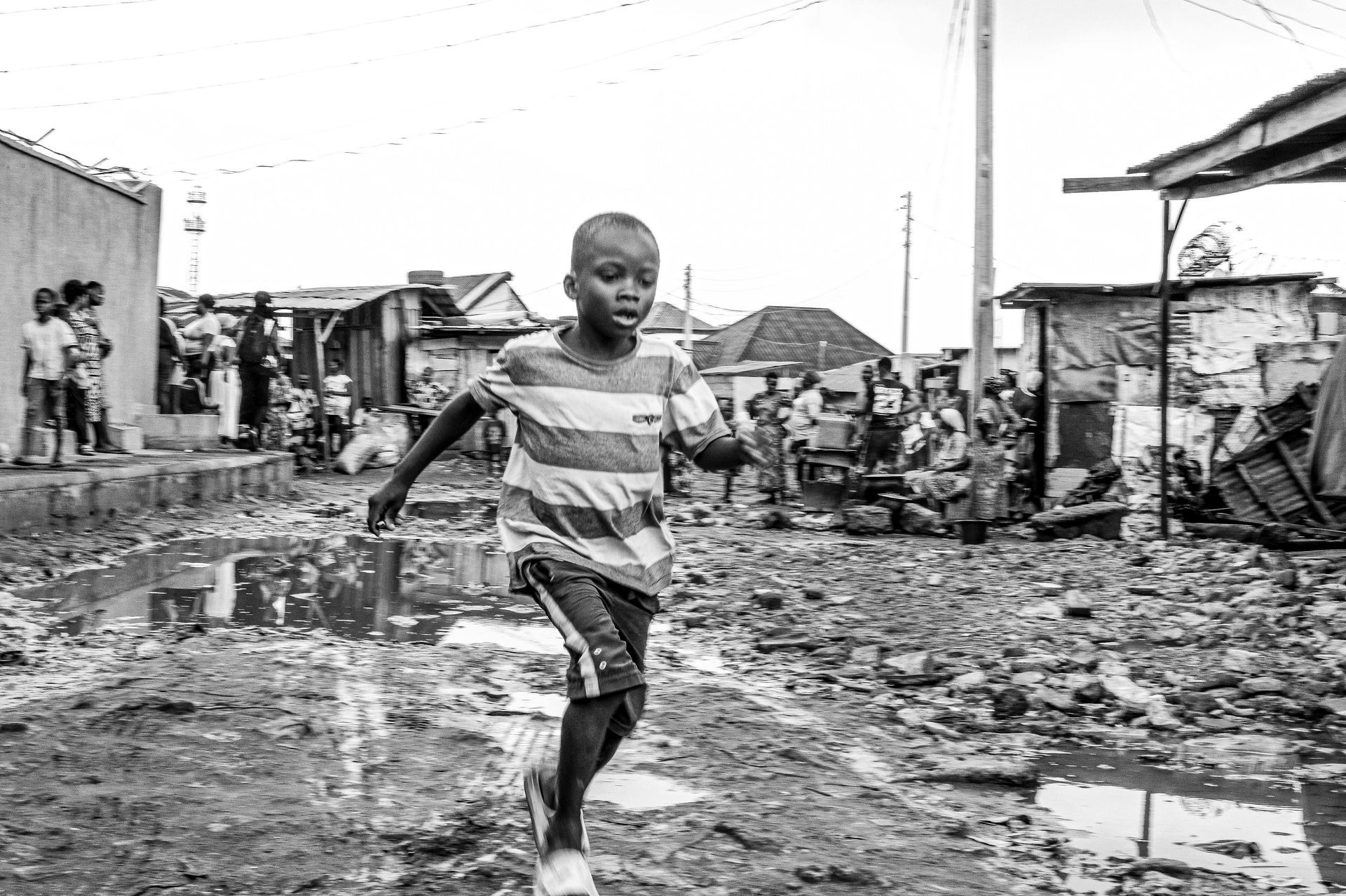
He would visit Onitsha occasionally. Not often. And when he did, he had no particular reason to venture into a part of town called Okpoko. Why would he? Okpoko at that time was not exactly what you would call inspiring. It was swampy. Waterlogged. More swamp than soil. More problem than promise. There were no good roads. No commercial activity worth writing home about. No infrastructure to speak of. If you had driven past it on the way to upper Iweka in Onitsha, you likely would have glanced out the window for a minute and looked away forever.
But his cousin — a man my father respected deeply, the kind of respect that is earned over years, not demanded — sat him down and told him to buy land there.
My father's first instinct was the same instinct that lives in every first-time buyer, every cautious person, every rational human being who has ever been asked to part with money they worked hard to earn:
"Why?"
Why buy land in a swamp? Why spend money on a place with no road, no prospects, no development in sight? He had never even walked on that land. He was based in Jos for goodness sake — how was he supposed to manage a plot of land hundreds of kilometers away in a flooded part of Onitsha he barely knew? And the trust question sat quietly beneath all of this. This was real money. Even if it was not a fortune, it was his. Why hand it over for a piece of earth that looked like it had no future?
But respect is a powerful thing.
And sometimes, the most important decisions we make in life are not the ones we made with full confidence. They are the ones we made despite our doubts, because we trusted someone wiser than our fear.
My father bought that land.
Life Moved On. And So Did He.
He returned to Jos. His business grew. He acquired more properties over the years, including where he lived and raised his young family in Plateau State. Life was moving in the right direction. That plot of land in Okpoko? Honestly, it faded into the background. Not forgotten completely, but not front of mind either. It was just... there. A quiet asset sitting in the corner of his portfolio, doing nothing dramatic, attracting no attention.
And then September 11, 2001 happened.
The world was watching New York. But in Nigeria, almost as if the chaos was contagious, the Jos crisis erupted barely a day later. Violence. Deaths. Shootings. Properties destroyed. Shops swallowed by fire. The kind of sudden, terrifying rupture in normal life that nobody prepares for because nobody believes it will actually happen to them — until it does.
My father's immediate area was spared. But that is not how crisis works. Crisis does not need to touch your house to paralyse your life. It touches your customers. It touches your supply chain. It touches the roads you use, the markets you trade in, the sense of normalcy that commerce depends on. His business began to suffer. And more than the business, there was fear. That particular fear that a parent carries when he looks at his children and wonders whether this place is still safe for them.
The decision came quickly: it was time to move.
He had already identified
Asaba. Close to Anambra, his home state. Calmer. Less chaotic than Onitsha. A city that felt like it had the right pace and the right energy for a fresh start. He had even found a space for his business. The plan was solid.
There was just one problem.
Selling property during a crisis is not like selling property in peaceful times. Nobody is buying in a warzone. The landed properties he had acquired in Plateau State were now nearly impossible to offload at a fair price. And his savings alone were not enough to fund the relocation, set up a new business, and keep a family going through the transition.
He was stuck. The exit was visible, but the door would not open.
Then He Remembered Okpoko.
Almost ten years had passed since he bought that plot. While life had been happening elsewhere — the trading, the growing family, the years in Jos — something had been quietly happening in Okpoko too.
It was still flooded. The roads were still not great. But the economics of Onitsha had started doing what economics always eventually does: it followed the people. Business owners who could not afford the rents around Fegge and the areas closest to the market had started migrating toward Okpoko. Why? Because it was affordable. And it was close enough to the major markets in Onitsha that the commute was manageable.
Where people go, activity follows. Where activity follows, value follows.
Government attention had started to turn toward the area. Infrastructure conversations were beginning. And the land? That swampy, unremarkable plot that nobody gave a second glance in the early nineties — had grown in value the way good things do — slowly, silently, without asking permission.
When my father listed it for sale, it took less than one month to find a buyer.
Less than one month.
The amount it sold for was not just enough to relocate the family to Asaba. It was enough to kick-start the business there too. One decision, made reluctantly, about a decade prior, by a young trader who was not rich, who did not fully understand the area, who had doubts and fears and very valid reasons to say no — that one decision became the bridge that carried his entire family from uncertainty to a new beginning.
We moved to Asaba in 2002.
I Went Back to Okpoko Recently.
I want you to picture what I saw.
The place that was once described to me as swampy, as bush, as an unlikely stretch of waterlogged nothing — today it is a functioning, developing, active part of Onitsha. Commercial activity. Buildings. People living and working and building their own futures there. It is not perfect. But it is alive. And it is valuable. In ways that nobody standing in it in the 90s could have fully predicted with certainty.
I stood there and I felt something I can only describe as a mixture of gratitude and understanding.
Gratitude for a relative who saw something others did not. Gratitude for a father who, despite his doubts, said yes. And understanding — the deep, settled kind — about what real estate actually is and what it actually does when you give it time.
That single plot of land did not just pay for a relocation. It put children through school. It seeded properties in Asaba that generate income today, decades later. My father is a retiree now, living in his own house, with assets that still work for him while he rests. The foundation of all of that — every school fee, every roof, every business restart — traces back to one reluctant purchase in a swamp in Okpoko in the early nineties.
I need you to sit with that for a moment.
So What Does This Story Actually Teach Us?
I did not share this to impress you. I'm sharing this because someone reading this right now is standing exactly where my father once stood —standing at the edge of a decision, looking at a piece of land, an opportunity, a property deal, and talking themselves out of it with perfectly logical, perfectly reasonable doubt.
Okpoko didn't just change my father's story — it handed me four truths I now carry everywhere.
1. Every real estate decision begins as uncertainty.
There is no such thing as an obvious investment in the moment you are making it. Nobody stands in Okpoko in 1992 and says, "This is clearly going to be worth this much in ten years." That clarity only exists in hindsight — and hindsight is not available at the point of decision.
This means that waiting for certainty before you buy is the same as deciding never to buy. The uncertainty you feel right now about that land, that property, that location someone is pointing you to? That is not a warning sign. That is just what the beginning of every good investment feels like. The question is never "am I certain?" The question is "is this sound enough to move on, and can I hold it long enough for time to do its work?"
My father was not certain. He moved anyway. Time rewarded him for it.
2. You do not need to be rich to start.
This is perhaps the most dangerous lie that keeps people on the sidelines of wealth-building — the belief that real estate is a game for people who already have money. That you need to be comfortable before you can buy. That the investment comes after the success, not before it.
My father was a petty trader when he bought that land. Not a rich man. Not a man with abundant savings and multiple income streams. He was someone who was just beginning to find his footing. And yet the purchase was possible. Modest, perhaps. Not his dream plot in the most prestigious location. But it was land. It was ownership. And ownership, however small, is the seed that grows into everything else.
The question is not whether you can afford the perfect property. The question is whether you can afford to start. Start where you are, with what you have, in the best location your current resources allow. Time and consistency will do the rest.
3. Real estate is not about the land you buy. It is about the future you secure.
My father did not buy a swamp. That is not what happened, even if that is what it looked like. What he actually bought — without knowing it fully at the time — was an exit from a crisis. A relocation fund. A business restart. School fees. A retirement. A legacy.
The land was just the vehicle. The future was the destination.
This is how you need to start thinking about every real estate decision you consider. Stop looking at what the land looks like right now and start asking what it could become. Stop evaluating the property by its present condition and start evaluating it by the direction of growth around it. Where is infrastructure going? Where are people moving? Where is the economy of a city expanding toward? The answers to those questions tell you far more about the value of a piece of land than anything you can see standing on it today.
Okpoko looked like a swamp. My father's relative saw an expanding city's next affordable frontier. One of them was looking at the present. The other was reading the future.
4. Wages will support your lifestyle. Only ownership builds the wealth that outlives you.
This is the one I need you to hear the loudest.
Your salary is not your financial strategy. It is your survival mechanism. It keeps the lights on, the children in school, the rent paid, the fridge stocked. And there is absolutely nothing wrong with any of that. But if your only financial plan is to earn more, save more, and spend less — you are running on a treadmill. You are moving but you are not going anywhere.
Wealth is not built by consuming.
It is built by owning assets, properties. Things that hold value, grow value, and generate value even when you are asleep, even when you are sick, even when you are no longer here.
My father is retired. He no longer trades. He no longer hustles every morning. But the properties he owns in Asaba — built on the foundation of that one plot in Okpoko — are still working. Still generating. Still providing. That is what ownership does. It converts today's sacrifice into tomorrow's freedom. And eventually, into a legacy that your children will tell stories about.
The time to start building is not when you are comfortable. It is now. Wherever you are. With whatever you have.
A Final Word Before You Keep Scrolling
My father is not a famous man. He has never given a TED talk. He has never been featured in Forbes. He is a quietly successful, deeply respected man who made one reluctant decision in the early nineties that echoes through our family's life to this day.
His story is not unique. It is not extraordinary. And that is exactly the point.
It is the kind of story that could belong to anyone — including you. All it requires is the willingness to start before you are ready, to trust the process before you can see the destination, and to understand that the land you are hesitating about today might be the very thing someone in your family is telling this exact story about twenty years from now.
The swamp becomes the prime location. The reluctant purchase becomes the foundation. The uncertainty becomes the testimony.
But only if you take the step.
What decision have you been putting off?
If this story resonated with you, share it with someone who needs to hear it today. The best time to plant a tree was twenty years ago. The second best time is right now.
Follow us for more real stories, real insights, and real conversations about building wealth through property — one decision at a time.
Frequently Asked Questions
Can I start investing in real estate in Nigeria without a lot of money?
Yes — and this is perhaps the most important thing to understand about real estate in Nigeria. You do not need to be wealthy to begin. My father was a petty trader with modest savings when he bought his first plot of land. What matters is not the size of your starting capital but the decision to start. Many people are waiting to feel financially comfortable before they invest, but that comfort rarely arrives on its own. A small plot of land in an emerging area — bought early and held patiently — will always outperform a large savings balance sitting idle in a bank account. The entry point for real estate in Nigeria is far lower than most people assume. Start where you are, with what you have.
How does land appreciate in value in Nigeria?
Land in Nigeria appreciates through a combination of infrastructure development, population growth, commercial migration, and government attention. When a government begins building roads, markets, or public facilities in an area, businesses and residents follow. As more people move into an area, demand for land increases — and with demand comes higher prices. This is exactly what happened in the story above. A piece of land that appeared worthless in the early 1990s became a prime commercial address once the surrounding city began expanding toward it. The key insight is that land does not create its own value — the activity around it does. Buying ahead of development, in areas where growth indicators are already visible, is the core strategy behind every successful real estate investor in Nigeria.
Is real estate a good investment in Nigeria in 2026?
Real estate remains one of the most reliable wealth-building vehicles available to Nigerians, particularly in fast-growing cities like Asaba, Enugu, and Abuja. While inflation, currency fluctuation, and economic uncertainty create anxiety in financial markets, land and property consistently hold or increase their naira value over time. In fact, periods of economic uncertainty are historically when the smartest property purchases are made — because hesitation from the majority creates opportunity for the few who act. Cities like Asaba in Delta State are currently experiencing significant infrastructure investment, commercial growth, and population influx, making them particularly attractive for both short and long-term real estate investment in 2026 and beyond.
What are the risks of buying land in Nigeria and how do I avoid them?
The most common risks when buying land in Nigeria include purchasing land with disputed ownership, buying without a verified title document, dealing with unregistered land agents, and purchasing in areas with no clear development trajectory. Here is how to protect yourself: Always verify the land title — the most secure documents in Nigeria are a Certificate of Occupancy (C of O) or a Governor's Consent. Never buy from an individual without involving a registered estate agent or property lawyer. Conduct a land search at the relevant state's Land Registry before any payment. Insist on a proper deed of assignment or contract of sale. Work with reputable, verifiable real estate companies — such as Meridian Vista Properties — who conduct due diligence on every listing they present to clients.
How long should I hold land before selling it in Nigeria?
There is no universal rule, but the general principle is this — the longer you hold land in a growth corridor, the greater your return. In Nigeria's emerging cities, significant appreciation typically begins to show within 5 to 10 years of purchase, and compounds substantially between 10 and 20 years. The story in this post is a perfect illustration: a plot purchased in the early 1990s had appreciated dramatically by the early 2000s — roughly a decade later. That said, the right time to sell is determined by your personal financial need and the maturity of the market around your land, not by an arbitrary timeline. The worst reason to sell land is impatience. The best reason is that the land has served its purpose in your wealth-building strategy and a better opportunity is available.
Why is Asaba a good place to invest in real estate?
Asaba, the capital of Delta State, has emerged as one of the most attractive real estate markets in southern Nigeria for several compelling reasons. First, infrastructure: the city has seen consistent government investment in roads, utilities, and public facilities, making it increasingly livable and commercially viable. Second, geography: Asaba sits at a strategic crossroads — close to Anambra State, connected to the Niger Bridge which is the gateway into the south east, and accessible from both the south-south and south-east geopolitical zones, giving it a natural commercial advantage. Third, affordability: compared to Lagos and Abuja, Asaba still offers entry-level land and property prices that represent significant upside potential. Fourth, growth trajectory: Asaba is a city on the rise — population influx, new businesses, and expanding residential demand all point to continued appreciation. For investors seeking high returns in an underpriced, high-growth market, Asaba is one of Nigeria's most compelling opportunities right now.
What is the difference between building wealth and earning salary?
A salary is income — it flows in when you work and stops when you do not. Wealth is ownership — it grows while you sleep, continues when you are ill, and outlasts you entirely. The fundamental difference is that a salary trades your time for money, while ownership makes your money work independently of your time. In practical terms: a salary pays your rent, your school fees, your food, and your lifestyle — but it rarely creates surplus fast enough to change your financial position. A property asset, on the other hand, does three things simultaneously: it holds value against inflation, it can generate rental income, and it appreciates over time — creating wealth that compounds without requiring your daily effort. The lesson from this story is not that salaries are bad. It is that salaries alone are not enough. Ownership is what converts a working life into a lasting legacy.